
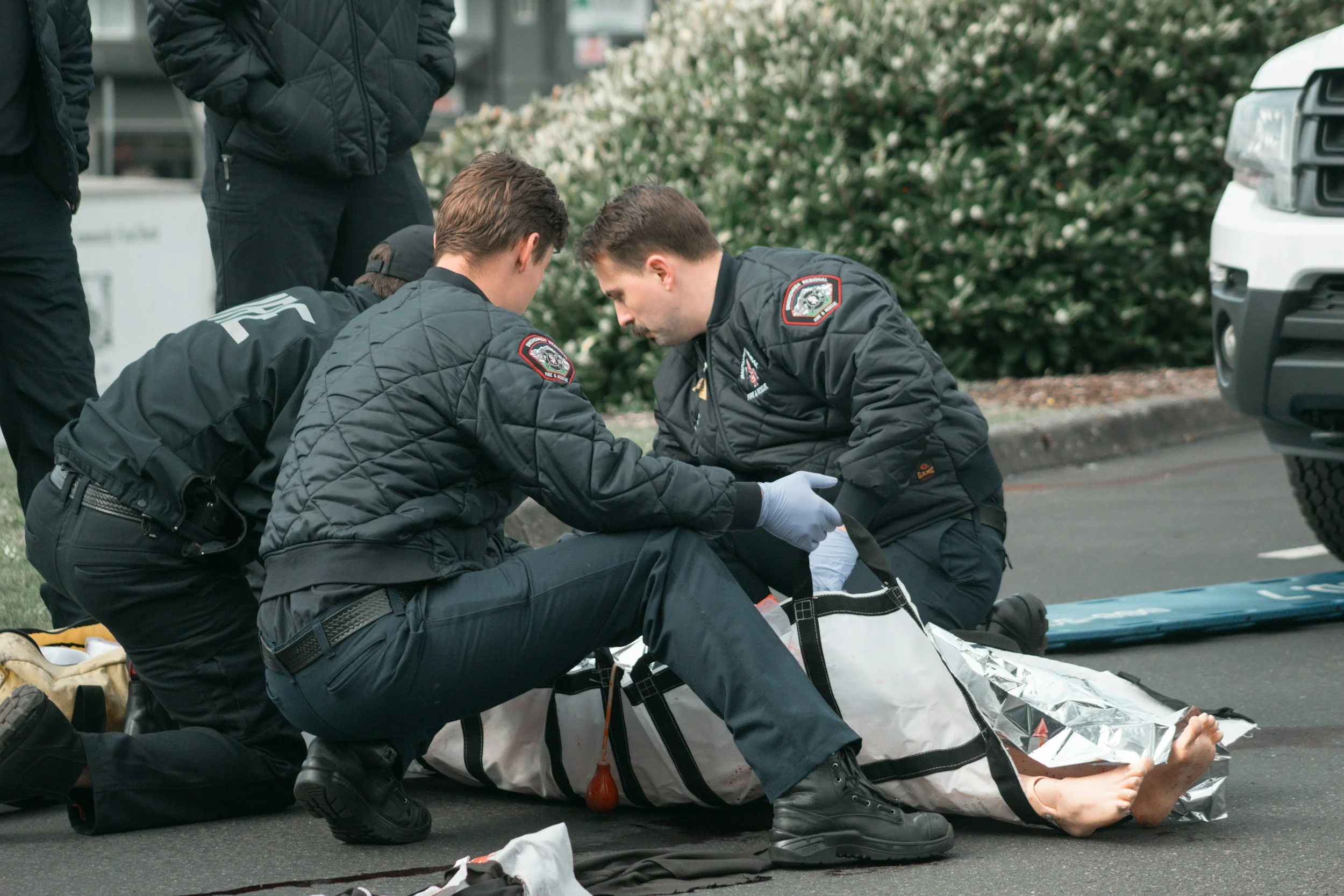
Communities across the country face serious challenges in accessing reliable emergency medical services. Staffing shortages, aging ambulances and equipment, long response times, outdated station locations, and gaps in coverage can leave people waiting too long for lifesaving care.
EMS should be treated as an essential part of our healthcare system, and federal policy should reflect the realities of providing emergency care in communities where access to hospitals, healthcare providers, transportation, and emergency resources is limited.
EMS & AMBULANCE
ACCESS PLAN
-
EMTs and paramedics provide medical care long before a patient reaches a hospital. Medicare and Medicaid reimbursement should reflect the care they provide, not simply whether an ambulance transports someone.
- Reimburse EMS for medically necessary evaluation and treatment provided at the scene and work to reduce unnecessary hospital trips.
- Expand reimbursement for community paramedicine and in-home care provided to reduce emergency visits.
- Modernize reimbursement rules so EMS agencies are treated as healthcare-delivery organizations, not simply transportation services.
-
Paramedics can help address healthcare shortages by providing appropriate follow-up and preventive care in communities where access to traditional providers is limited.
- Allow qualified community-paramedicine programs to receive Medicare and Medicaid reimbursement for approved services.
- Support post-discharge visits, medication checks, chronic-disease monitoring, fall prevention, and basic health assessments.
- Connect patients with primary care, behavioral health, transportation, and other community services before a health problem becomes another emergency.
-
Communities need dependable EMS coverage around the clock, even where low call volume or limited local tax revenue makes traditional reimbursement inadequate.
- Create federal EMS readiness payments based on population, geography, response times, and community need.
- Help fund the staffing, medications, equipment, and operational costs required to maintain 24-hour emergency coverage.
- Prioritize rural and medically underserved communities where maintaining backup coverage is especially difficult.
-
Ambulance stations and emergency-response hubs should be located according to where people live and travel today, not population patterns from decades ago.
- Fund the relocation, expansion, and/or modernization of EMS hubs in areas with long response times or limited coverage.
- Use population growth, call data, hospital distance, major roadways, and local hazards to determine where new facilities are needed.
- Include funding for backup power, communications equipment, medical storage, crew facilities, and other essential infrastructure.
-
Local 911 coverage should not disappear for hours because an ambulance is transporting a patient to a distant hospital or specialty-care center.
- Support regional critical-care and interfacility transport teams for long-distance hospital transfers.
- Reimburse the full cost of long-distance transfers, including crew time, mileage, and the need for backup coverage when local ambulances are utilized.
- Provide funding to communities that need additional units to maintain emergency coverage while another ambulance is out of service.
-
Communities cannot maintain reliable emergency care without enough trained EMTs and paramedics who can afford to build long-term careers in the profession.
- Support competitive wages and benefits for EMS professionals serving rural and underserved communities.
- Expand paid apprenticeships, tuition assistance, and service-based loan repayment for EMT and paramedic training.
- Fund continuing education, advanced certifications, and mental-health support for emergency responders.
-
Communities should not have to wait until ambulances, radios, or lifesaving medical equipment fail before they can afford to replace them.
- Establish predictable federal funding for ambulance and emergency-equipment replacement.
- Support modern cardiac monitors, defibrillators, ventilators, stretchers, pediatric equipment, and other lifesaving tools.
- Upgrade 911 systems, interoperable radios, broadband, and cellular connectivity used by emergency responders.